

The chatbot that doesn'tknow when to pass the ball
A bot that answers everything looks efficient until it freezes on the question that closes the sale. What separates automated service from lost service is knowing when to call a human.
The chatbot that doesn't know when to pass the ball
Answering everything isn't quality. Knowing when to stop is.
The customer asks the price of a service that depends on a quote. The bot replies with the generic price list. The customer reads it, doesn't recognize their own case, and disappears.
Nobody logged a failure. There was no error, no timeout, no complaint. The dashboard will show the conversation as handled.
The problem isn't that the bot answered wrong — it is that it didn't notice that question wasn't its to answer.
A good bot has two skills, and the second is almost never configured: answering what it knows, and *recognizing what it doesn't know*. Without the second, every hard question becomes a lukewarm answer that ends the conversation instead of moving it forward.
Where the bot needs to stop and call someone
- 1**Prices that depend on scope** — a generic price list for a specific case pushes people away more than silence.
- 2**An irritated customer** — a complaint answered by a robot often becomes a public complaint.
- 3**A question repeated in the same conversation** — if the person rephrased it, the first answer didn't help.
- 4**Anything involving deadlines or contracts** — whatever commitment the bot makes, someone will have to keep.
A 5-minute test
Automation isn't measured by how many conversations the bot solved on its own. It is measured by how many it handed to a human at the right moment — and how many of those became customers.
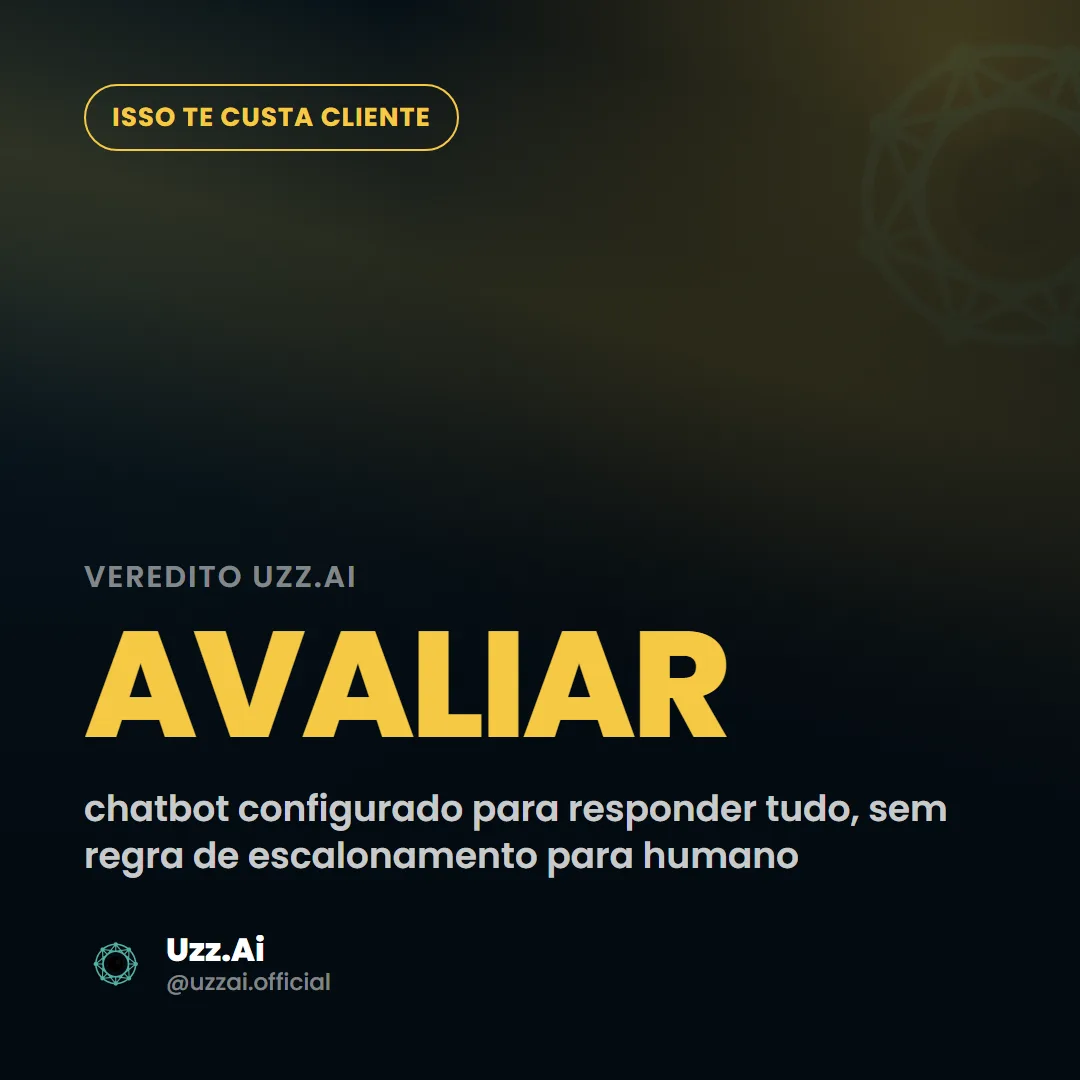
Uzz.Ai verdict: assess
Who needs to look at this: anyone who put a bot on WhatsApp more than two months ago and never read the conversations it closed on its own
Want to know where your bot is losing conversations?
We read your real conversations and map the point where service should have turned human.
Talk to the team